
Borobudur Temple Ancient History: The Story of an Ancient Buddhist Monument
The Borobudur Temple Ancient History reveals the remarkable journey of one of Indonesia’s most valuable cultural treasures. Located in Central Java, Borobudur represents the achievements of ancient Javanese civilization through architecture, religion, and artistic expression.
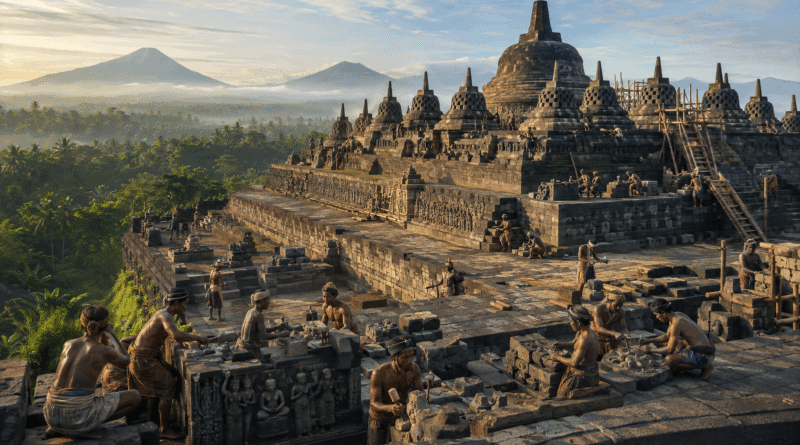
Built during the Sailendra Dynasty around the 8th and 9th centuries, Borobudur became one of the greatest Buddhist monuments in Southeast Asia. The temple reflects the influence of Mahayana Buddhism and the advanced skills of ancient builders.
The Origins of Borobudur in Ancient Java
Borobudur was constructed during the golden period of the Sailendra Dynasty. This era was marked by the growth of Buddhist traditions, cultural development, and impressive architectural projects.
The rulers of the Sailendra Dynasty supported the construction of Borobudur as a sacred Buddhist monument. The temple was created as a place for meditation, pilgrimage, and spiritual learning.
Builders used volcanic stone from nearby areas to create the structure. Millions of stone blocks were arranged carefully to form terraces, stairways, stupas, and detailed relief galleries.
Visitors can discover more about this historical journey through Borobudur Temple history, origins, rediscovery, restoration, and legacy.
Architecture and Buddhist Symbolism
The architecture of Borobudur reflects deep Buddhist philosophy. The monument was designed according to the concept of Buddhist cosmology.
Borobudur consists of three main levels: Kamadhatu, Rupadhatu, and Arupadhatu.
Kamadhatu represents the world of human desires and attachments. Rupadhatu symbolizes the transition toward spiritual awareness. Arupadhatu represents the highest stage of enlightenment.
The temple contains thousands of relief panels and hundreds of stupas. These elements explain Buddhist teachings and provide information about ancient Javanese culture.
Borobudur as a Center of Buddhist Learning
During its active period, Borobudur functioned as an important Buddhist pilgrimage site. Monks and visitors traveled to the monument for meditation and religious activities.
The temple was designed as a symbolic spiritual journey. Pilgrims walked through the galleries while observing relief stories that explained Buddhist values.
The carvings displayed stories from Buddhist texts, including teachings about compassion, wisdom, and moral behavior.
The relief panels also showed scenes from daily life in ancient Java. They provide valuable evidence about traditions, architecture, and social activities during that period.
The Decline and Rediscovery of Borobudur
After the decline of the Sailendra Dynasty, Java experienced major political and religious changes. Borobudur gradually lost its original role and was eventually abandoned.
For centuries, the monument remained hidden beneath volcanic materials and vegetation. However, local communities continued to recognize its existence.
Borobudur was rediscovered in the early 19th century during the British administration of Java. Further research revealed the historical and architectural importance of the monument.
Restoration and Modern Heritage
After rediscovery, experts identified many preservation challenges. Weather conditions, water damage, and natural erosion threatened the stability of Borobudur.
Several restoration projects were conducted to protect the monument. The largest restoration program took place between 1975 and 1982 through cooperation between Indonesia and UNESCO.
UNESCO later recognized Borobudur as a World Heritage Site in 1991. This recognition confirmed its importance as a global cultural treasure.
Travelers who want to explore this ancient masterpiece can join a Borobudur Temple tour to experience its history, architecture, and spiritual meaning.
Conclusion
The Borobudur Temple Ancient History represents the achievements of ancient Java and the lasting influence of Buddhist culture. From its construction during the Sailendra Dynasty to its preservation today, Borobudur continues to inspire people worldwide.
Understanding its history allows visitors to appreciate Borobudur beyond its physical beauty. Every terrace, relief, and stupa reflects centuries of creativity, spirituality, and cultural heritage.
